As a long-established Pittsburgh institution, we have always aspired to participate in — and hopefully contribute to — the changing life of the city. We hope the introduction of our new whiskey brand will be a new chapter towards this aim. Help us write the next episode of Pittsburgh’s whiskey history!
Pittsburgh’s long heritage of whiskey production and drinking has much in common with Ireland’s. Indeed, in the 18th century the city almost came to blows with the fledgling Federal government in what would become known as the Whiskey Rebellion.
Encouraged by Treasury Secretary Alexander Hamilton, President George Washington introduced a tax on whiskey production in 1791 to help reduce the debts accumulated during the American Revolution. Pennsylvanians, many of whom had fought in the war, were outraged. Many local farmers distilled whiskey to supplement their low incomes. Indeed, rural families often used the amber liquid to barter for other goods, rather than using scarce cash. Other PA citizens simply viewed the tax as a power grab by the Federal government (located in Philadelphia of all places!).
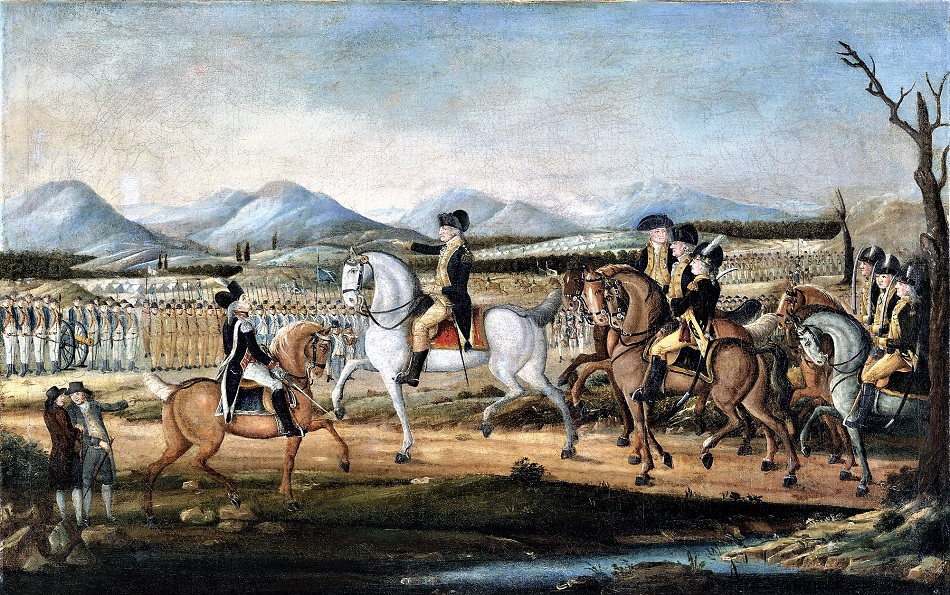
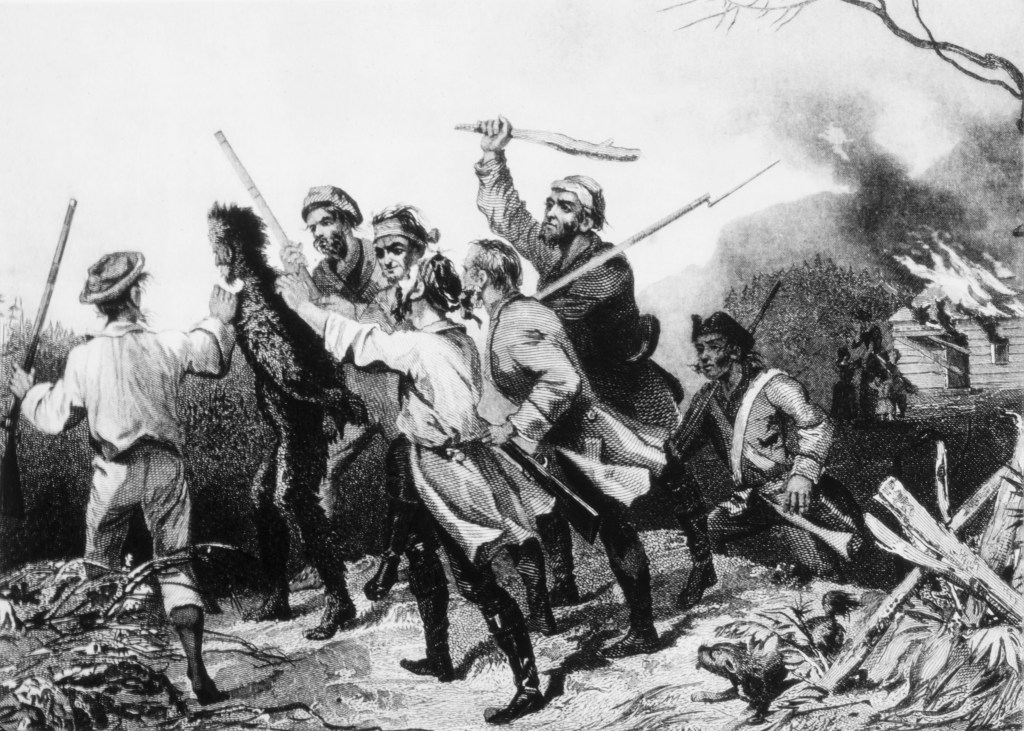
Feisty rebels went so far as to tar-and-feather agents trying to collect the tax, burning their homes as well. Somewhat reluctantly, President Washington, believing the authourity of his new government was being undermined, sent a militia to quell the uprising. By the time the troops arrived, the protesters had dispersed. A small number of rebels were arrested. Two were tried for treason, including Philip Wigle (remember that name), but both were eventually granted pardons.
In 1802, President Thomas Jefferson, who always opposed the tax, repealed the Act. Ironically, George Washington went on to become an emminent whiskey producer during his retirement at Mount Vernon. However, some claim that the episode provided an impetus for the Kentucky bourbon and Canadian whiskey industry. These events were so important in Pittsburgh’s heritage that a Whiskey Rebellion Festival was established in 2008. Ironically, perhaps, the annual gala takes place in Washington County!
Western Pennsylvania’s rye whiskey business did recover. And, it is claimed, producers supplied half a barrel to every citizen in the country by the mid-nineteenth century! However, Prohibition proved to be too much. To be sure, a few distilleries stayed in business for medicinal purposes — imagine the number of prescriptions! But, they all closed by the 1930’s.
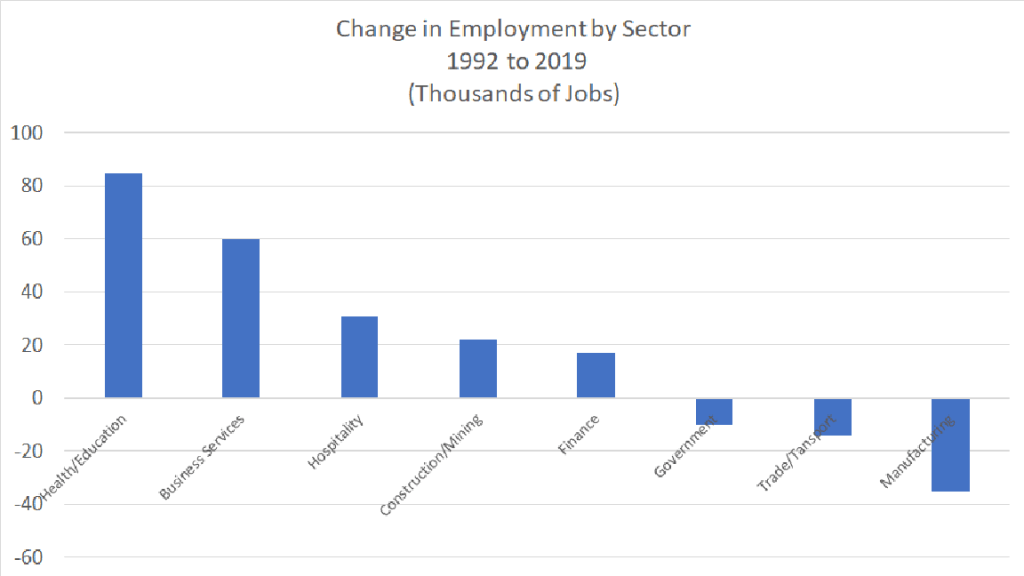
In the 21st Century, both Pittsburgh and the whiskey business are being transformed. Pittsburgh’s remarkable transition from economic decline to post-industrial prosperity is an example for other American cities. Since the Harp and Fiddle opened its doors in 1992, industrial jobs may be fewer, but key sectors such as health care, technology, finance, hospitality, and services are booming.
In 2005, the state’s first distillery since the 19th century was established in Philly. Closer to home, in 2012 Wigle’s (remember him?) — a neighbour in the Strip District — became Pittsburgh’s first spirits producer since the repeal of the Constitution’s 18th amendment.
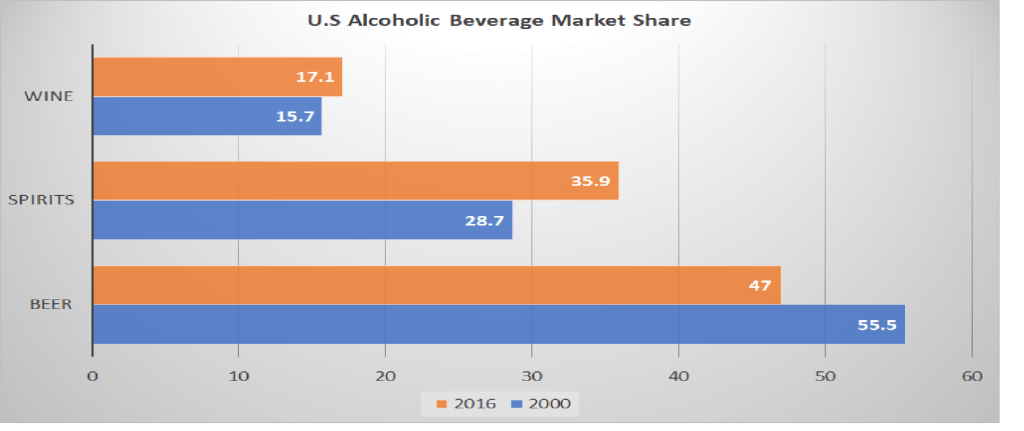
Along with the economy, we think tastes are changing. Sure, we Pittsburghers do like our beer: we drink 20% more per capita than the rest of the country! And, the Harp and Fiddle will always be around to pour you a pint! However, millennials are an important demographic in Pittsburgh’s new economy. This group likes to experiment with new categories, new brands, new cocktails. And, market share of spirits is growing (at the expense of beer).
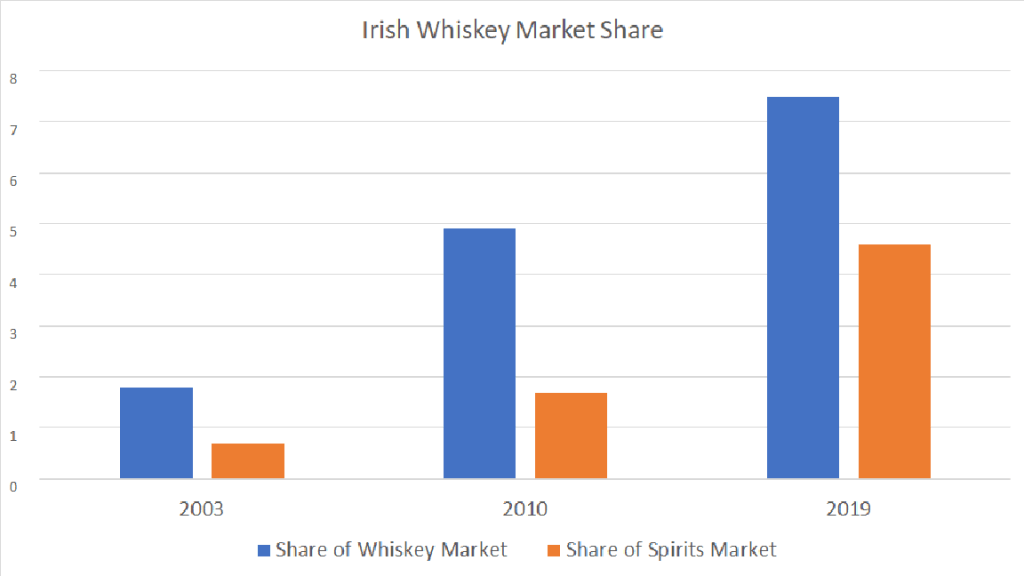
And, within the expanding spirits market, Irish whiskey is the fastest growing category. Market share may still be small, but it’s growing quickly. We hope our new brand will be part of Pittsburgh’s Second Whiskey Rebellion!
 Mullaney's Irish Whiskey